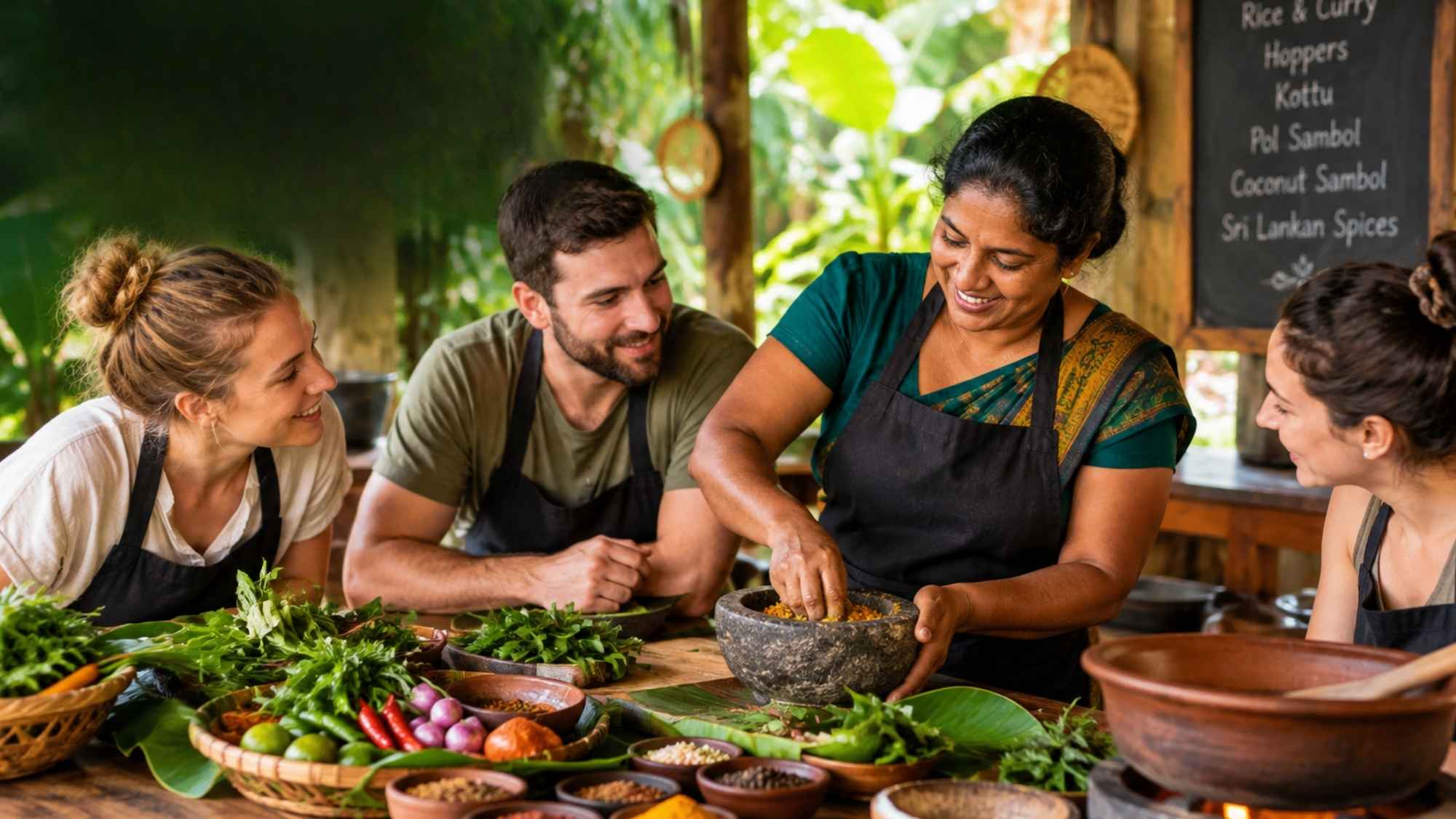
Rice and curry is not one dish
A Sri Lankan rice and curry is a spread: rice in the middle, then five to ten small dishes around it. Dhal tempered with curry leaves and mustard seed. A fish or chicken curry. Two or three vegetables: beetroot, ash plantain, jackfruit. A mallung of shredded greens and coconut. Papadam. And pol sambol, the coconut, chilli and lime relish that carries everything.
Hoppers and string hoppers
An appa, or hopper, is a fermented rice-flour batter swirled in a small wok until it forms a bowl with a lacy rim and a soft centre. Order it with an egg cracked into the middle. String hoppers are steamed nests of rice noodles, eaten at breakfast with dhal and a coconut gravy called kiri hodi.
Kottu roti
Godamba roti chopped on a hot plate with vegetables, egg and often cheese, to a rhythm you can hear from the street. It is the island late-night food and the sound of the cleavers is how you find it.
Regional specialities
Jaffna crab curry, dark with roasted spice and tamarind. Ambul thiyal from the south, tuna cured with goraka, black pepper and no chilli, which keeps for days without refrigeration. Lamprais from the Dutch Burgher tradition: rice, meat, sambol and a frikkadel wrapped in banana leaf and baked. Kool, a Jaffna seafood broth thickened with palmyra flour.
How to eat
With your right hand, mixing small amounts of rice with one curry at a time rather than stirring everything together. Cutlery is always offered and nobody minds. Ask for less spicy if you need to. Most kitchens will make it kid-mild without being offended, but Sri Lankan mild is still warmer than most.
A short list worth travelling for
Upali and Ministry of Crab in Colombo. Kaema Sutra for a modern take. The Rice Bowl in Kandy. Any village lunch on a tour: the eight-dish spread cooked in a home kitchen is consistently better than anything in a hotel buffet.